Heavy-Duty Containment with Barbed Wire 12.5 Gauge
Release time:2026-02-18 Click:16
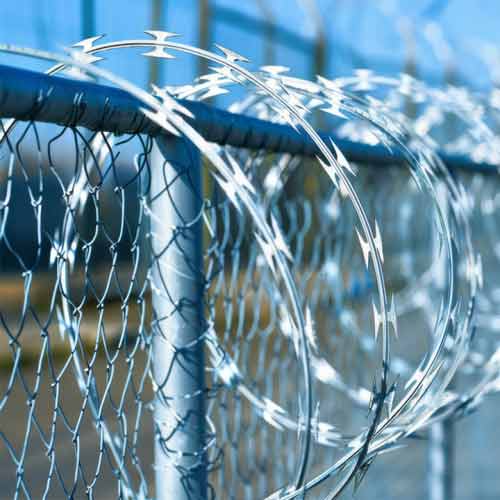
When it comes to high-security perimeters, agricultural fencing, or military installations, the thickness of the material is a critical determinant of strength. Barbed wire 12.5 gauge represents a heavy-duty standard, significantly thicker than the 14 or 16 gauge wire used for light-duty residential fencing. The gauge number refers to the wire diameter; a lower number means a thicker wire. At 12.5 gauge (approximately 2.64 mm), the wire possesses immense tensile strength, making it resistant to cutting, stretching, and impact. This specific gauge is often mandated for prison perimeters, livestock containment for large animals like bulls, and critical infrastructure protection where failure is not an option.
The construction of barbed wire 12.5 gauge involves two strands of high-carbon steel twisted together to form the core, with sharp barbs (or "points") crimped onto the strands at regular intervals. The barbs are typically made from the same gauge wire to ensure they do not break off under pressure. Because the wire is so thick, it requires specialized machinery to twist and crimp, resulting in a product that is rigid and difficult to manipulate by hand. The spacing of the barbs is usually 4 to 6 inches, designed to snag clothing or skin effectively. For extreme security applications, the wire may be galvanized and then coated with PVC to add a layer of corrosion resistance and to prevent the sharp points from rusting, which would dull their effectiveness.
Durability is the hallmark of barbed wire 12.5 gauge. In outdoor environments, it is subjected to UV radiation, rain, snow, and temperature fluctuations. The high carbon content of the steel gives it excellent fatigue resistance, meaning it can flex slightly under wind load without snapping. However, because it is so stiff, it requires heavy-duty posts (often steel T-posts or concrete-set timber) to support it. If used with flimsy posts, the tension of the 12.5 gauge wire could pull them over. The wire's thickness also makes it ideal for areas with predator pressure; coyotes or wolves cannot bite through it, and it resists being cut by standard wire cutters, requiring industrial-grade bolt cutters or angle grinders to breach.
Installation of barbed wire 12.5 gauge is a labor-intensive process that demands precision. The wire is usually strung on a "strainer" wire first to get it roughly in place, then tightened using a come-along winch or a ratchet lever. Because the wire is thick, it does not bend easily around corners; instead, specialized "H-braces" or corner posts are used to change direction. For livestock, the bottom wire is often electrified to prevent animals from testing the barrier. In high-security zones, multiple strands (3 to 5) are used, with the top strands being barbed wire 12.5 gauge to prevent climbing. The tension must be perfect—too loose, and it sags; too tight, and it risks breaking the posts or the wire itself during a storm.
Finally, the economic logic of using barbed wire 12.5 gauge is based on risk mitigation. While it is more expensive per foot than lighter gauges, the cost of a breach involving large livestock or dangerous criminals is astronomically higher. A single bull escaping a pasture can cause thousands of dollars in damage to crops or vehicles. In a prison, an escape attempt can cost millions in manpower and legal fees. The 12.5 gauge wire acts as a psychological and physical "stop" sign that is taken seriously by both animals and humans. It is a material that says "do not cross" with absolute authority. For anyone responsible for securing high-value assets or dangerous entities, this gauge is not just a recommendation; it is a necessity for maintaining order and safety.
Previous article:Combine Strength and Ecology with Gabion Mesh
Next article:BTO-22 Razor Wire: The Gold Standard in Perimeter Security
Hot products
Mobile: +86 13292822131
Email:metalproducts2023@163.com
Email:634049339@qq.com